

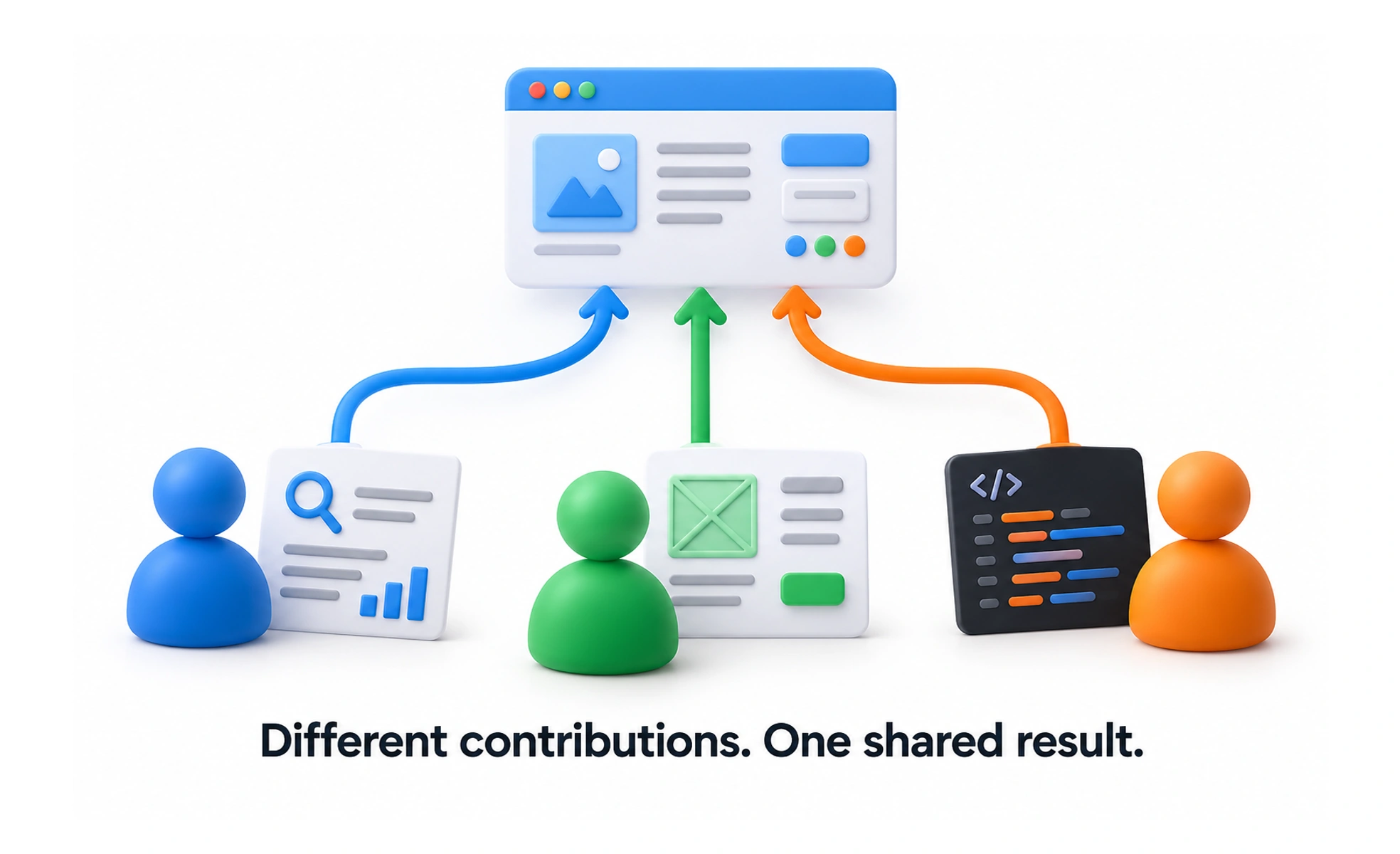
Team collaboration is the coordinated effort of people working toward a shared result. It depends on clear goals, useful communication, trust, and an understanding of how different contributions fit together.
A rowing crew needs a shared direction and coordinated effort. Strong individual strokes are less useful when the crew pulls at different times.
Make work and decisions visible
Clarify responsibilities, dependencies, and where important decisions are recorded. Share changes that affect others early enough for them to respond. Visibility should reduce the need to chase updates, while keeping reports focused on what helps people coordinate.
Use communication deliberately
Choose a live conversation for ambiguous or sensitive discussion and written communication for information people need to revisit. Keep a record of decisions made in meetings. More messages and meetings do not necessarily mean better collaboration if people still cannot find the current agreement.
Example: a lesson completion flow
Design, engineering, and content contributors need to agree on reward wording, stored progress, and what the next action does. Reviewing the complete flow together can catch a mismatch between a success screen and a failed save. The team’s result matters more than each discipline finishing its own isolated task.
Frequently asked questions
Key takeaways
- Agree on goals, evidence, and constraints.
- Make responsibilities and decisions easy to find.
- Choose communication methods for the task.
- Review the shared outcome across disciplines.