

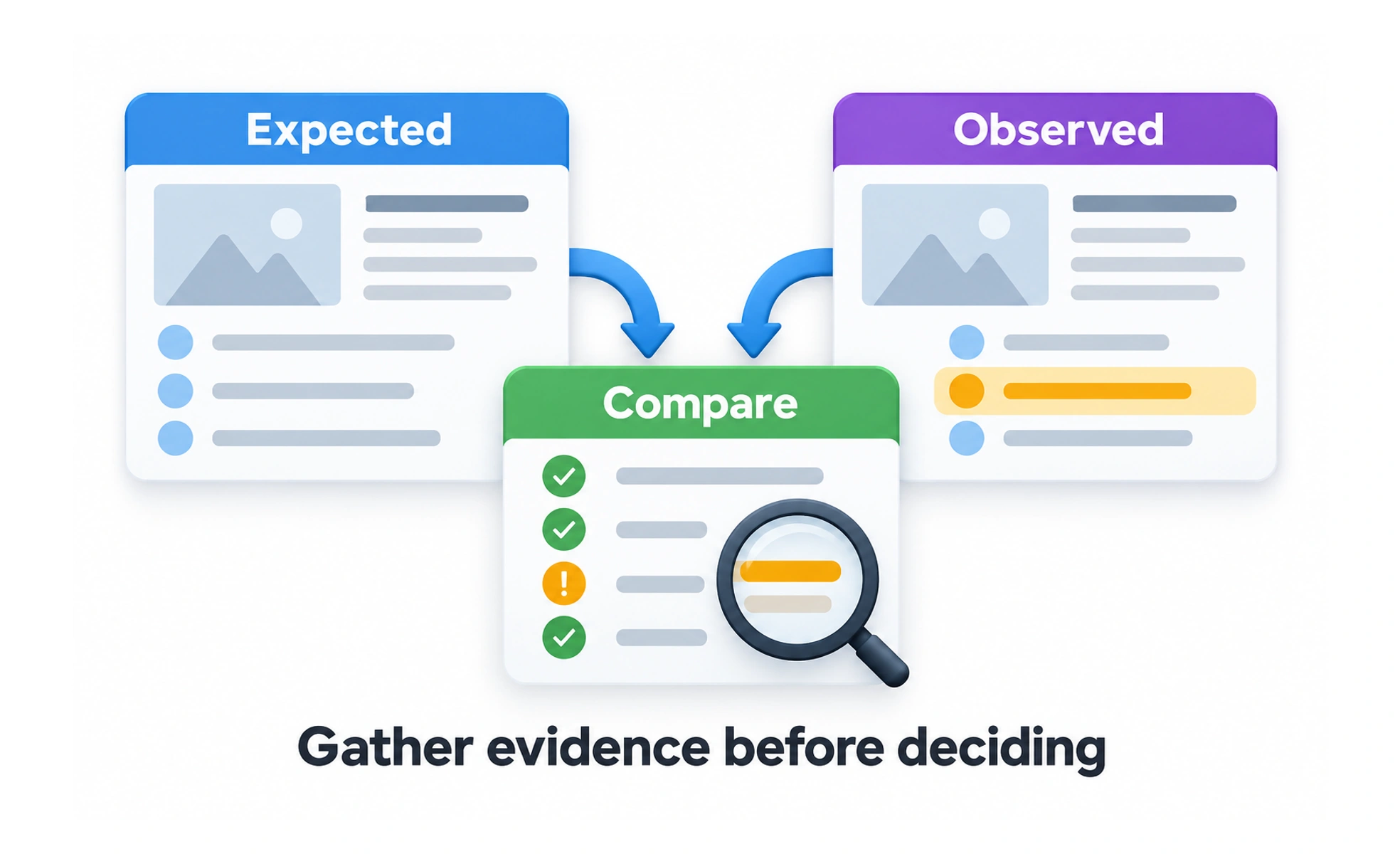
Teams test at different stages, from an early concept to a released service. The method may involve users, software checks, experiments, or operational reviews. A useful test starts with a question and uses evidence suited to answering it.
A bridge is checked at several stages: its design, materials, construction, and performance. Product testing also uses different checks because no single test can reveal every kind of failure.
Define what is being tested
Clarify the product, change, or hypothesis, the expected result, and the risks that matter. Without this, teams can run many checks yet still miss the condition that would make the release harmful or ineffective.
Match the method to the question
Automated tests can catch repeatable software defects; usability sessions show how people interact with a design; experiments can compare outcomes under controlled conditions. Choose a method based on evidence needs, not on the assumption that one testing technique is universally best.
Cover realistic states and users
Include ordinary and edge cases, different devices, accessibility needs, and failure states that matter for the product. Prioritize by likelihood and severity. Testing every possible combination may be impossible, so make the coverage strategy explicit.
Interpret results with limits
A passing test only supports the conditions it covered. Record what was checked, what was excluded, and what action follows a failure. Combine forms of evidence when the decision is important, and avoid claiming certainty beyond what the test can provide.
Frequently asked questions
Key takeaways
- Start with a question, expected result, and meaningful risks.
- Select methods that fit the kind of evidence needed.
- Include important users, states, and failure conditions.
- Report coverage and limitations with the result.