

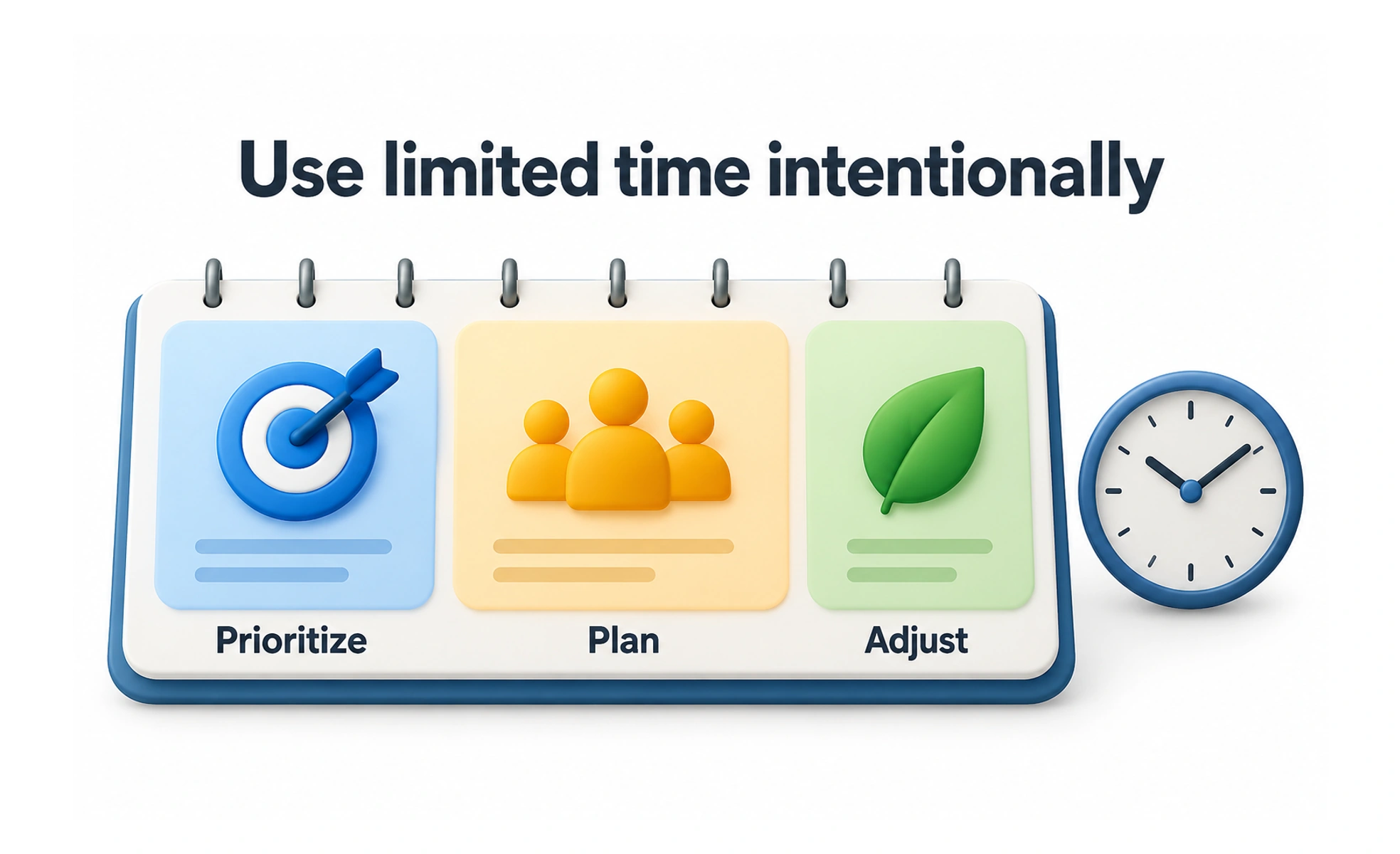
Time management is the practice of deciding how to use limited time across tasks, commitments, and rest. It combines prioritization, planning, and adjustment as needs or circumstances change.
A calendar is like a map of commitments, not a machine that creates more hours. Leaving space for travel and delays makes a plan more realistic.
Choose priorities before filling the calendar
Clarify outcomes, deadlines, dependencies, and the cost of delay. Compare work by importance and urgency rather than treating every request as equally critical. Ask what can be postponed, simplified, delegated, or stopped when the available time cannot cover everything.
Plan around capacity
Estimate effort using previous work where possible, and include meetings, transitions, and recovery time. People’s energy and responsibilities vary, so a schedule should be a useful guide rather than a measure of personal worth. Leave capacity for uncertainty instead of planning every minute.
Protect focus and coordinate
Group related tasks or set periods for concentrated work when the environment allows. Communicate availability and dependencies so colleagues can plan. Tools such as calendars and task lists help externalize reminders, but they do not resolve unclear priorities or unrealistic workload by themselves.
Review and adjust
At a regular interval, compare the plan with what actually happened. Notice interruptions, underestimated tasks, and recurring blockers without assuming every delay was a personal failure. Update commitments and discuss capacity early. A sustainable plan accounts for rest and the fact that some work will take longer than expected.
Frequently asked questions
Key takeaways
- Prioritize outcomes before scheduling tasks.
- Plan for real capacity, dependencies, and uncertainty.
- Use tools to support focus and coordination.
- Review workload and adjust commitments deliberately.