

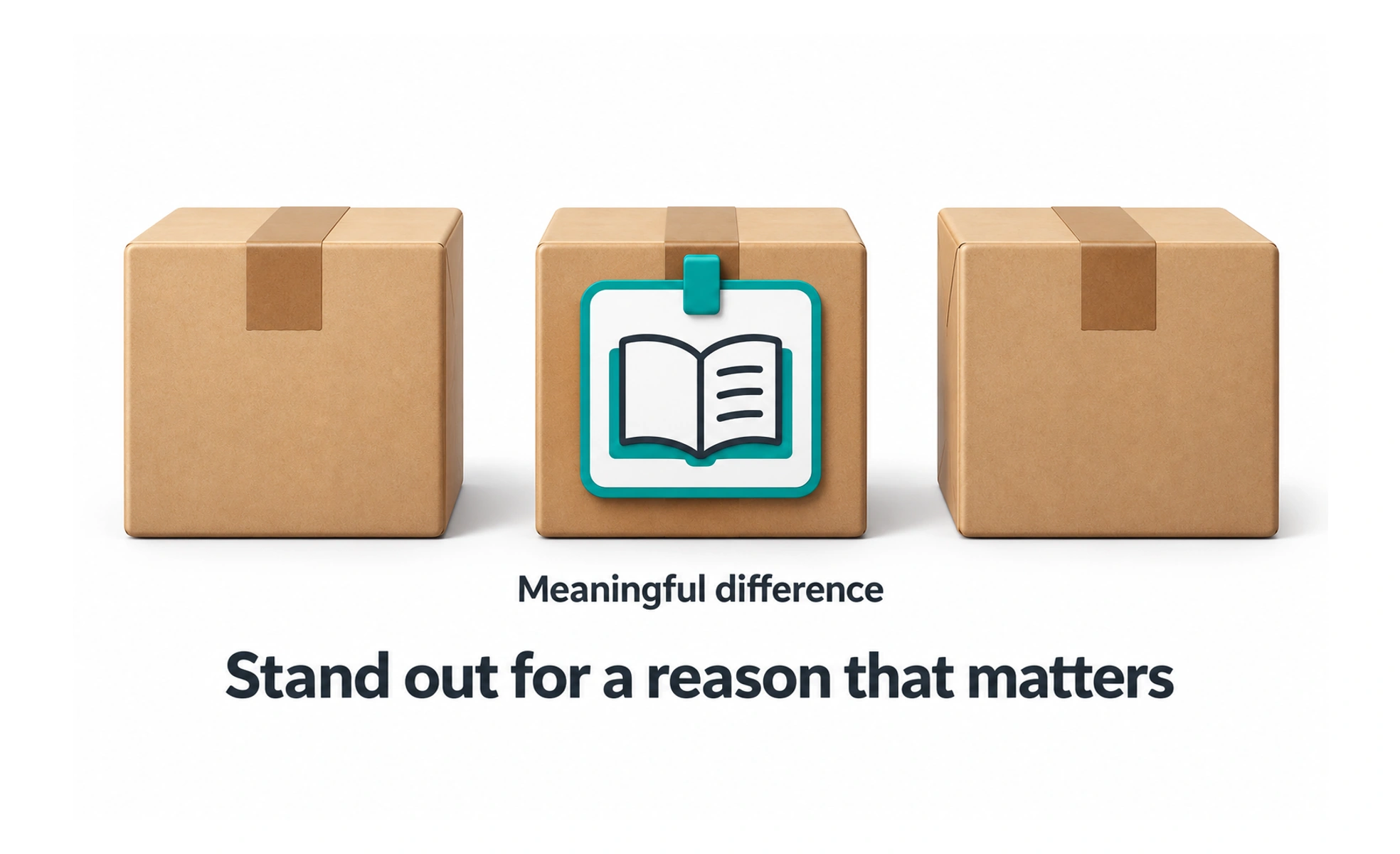
A useful USP connects a real customer need with an advantage a product can credibly deliver. It is more specific than a catchy slogan and should help people understand why they might choose this offer over relevant alternatives. The claim needs evidence and must remain true in the actual experience.
A USP is like a clear reason to choose one tool from a crowded toolbox: it names the job that tool does especially well and for whom.
Start with the customer and alternatives
Identify who the offer is for, what problem they are trying to solve, and what they might choose instead. Alternatives can include a competitor, an existing workaround, or doing nothing. Without this context, a claim such as “simple” or “innovative” says little about why the difference matters.
Connect a distinctive capability to a benefit
A product feature becomes a stronger proposition when it explains the result a customer receives. For example, a shared workspace may reduce the time a distributed team spends reconciling versions. The differentiator should be relevant to the audience and difficult for alternatives to match in the same way.
Make the claim credible
A proposition should be specific enough to evaluate and supported by product behavior, customer evidence, or a defensible capability. Avoid absolute claims that cannot be substantiated. If the benefit depends on a particular plan, workflow, or audience, include that condition rather than implying that it applies to everyone.
Use it to guide experience and communication
A USP can help teams prioritize product decisions and explain value across a landing page, onboarding, and sales conversation. It is not a substitute for those experiences: the product must deliver the promised benefit. Revisit the proposition as customer needs, competitors, and capabilities change.
Frequently asked questions
Key takeaways
- Describe a meaningful difference for a specific audience and need.
- Connect product capabilities to outcomes customers care about.
- Support the claim with evidence and state its limits honestly.
- Make sure the product experience delivers the promised benefit.