

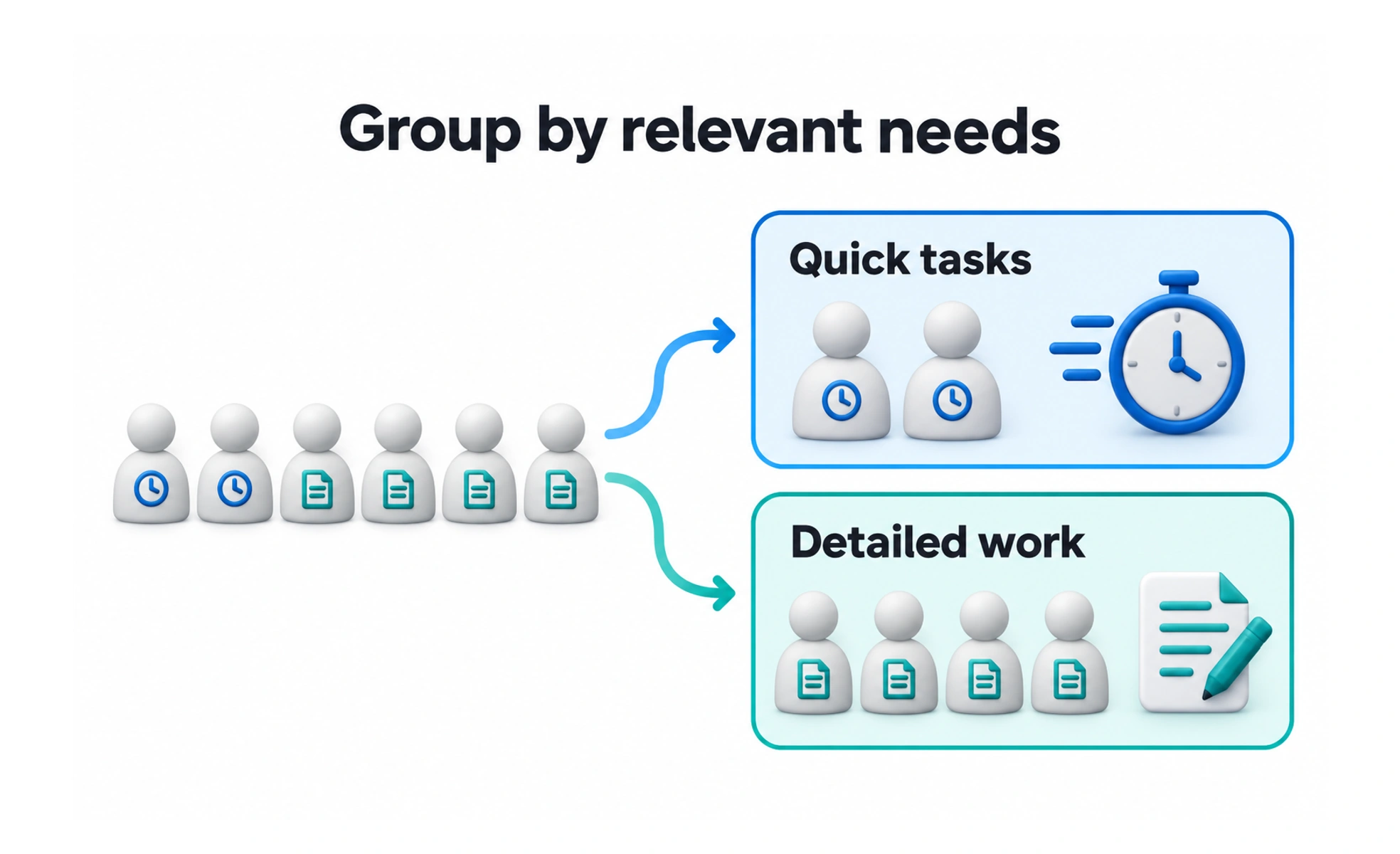
A single average can hide very different experiences. Someone setting up a product for the first time may need guidance that an experienced administrator does not. A useful segment helps answer a product question; it is not simply a label attached to an account.
Choose a difference that matters
Start with the decision. If you are improving setup, experience with the task may matter more than age. If you are improving team billing, responsibility for payments may matter more than how frequently someone signs in.
Describe how a person qualifies for a segment using evidence you can obtain appropriately. Do not invent motives from a demographic category or collect personal details without a clear purpose.
Keep groups useful and revisable
Check whether the grouping explains a meaningful difference. People in one segment can still vary, and a person may move between segments as their role or experience changes.
Avoid creating so many tiny groups that the team cannot understand or serve them. Segments should improve decisions, not make a dashboard look more sophisticated.
Example: occasional and frequent report users
A reporting tool separates people who prepare a report every day from people who visit only at month end. Research finds that daily users rely on saved filters, while occasional users need help interpreting unfamiliar totals.
The team preserves quick access for frequent work and adds concise explanations near the totals. It does not force every person through the same introductory tour whenever they return.
Check who the grouping leaves out
Review segments against actual task outcomes and research.
- Explain the purpose and definition of each group.
- Check differences within groups as well as between them.
- Avoid sensitive labels without a justified need.
- Update segments when behavior or responsibilities change.
A segment is an analytical tool, not a complete description of a person.
Frequently asked questions
Key takeaways
- Define segments around a useful product question.
- Prefer relevant evidence over demographic assumptions.
- Allow membership and definitions to change.
- Check whether grouping improves the experience.