

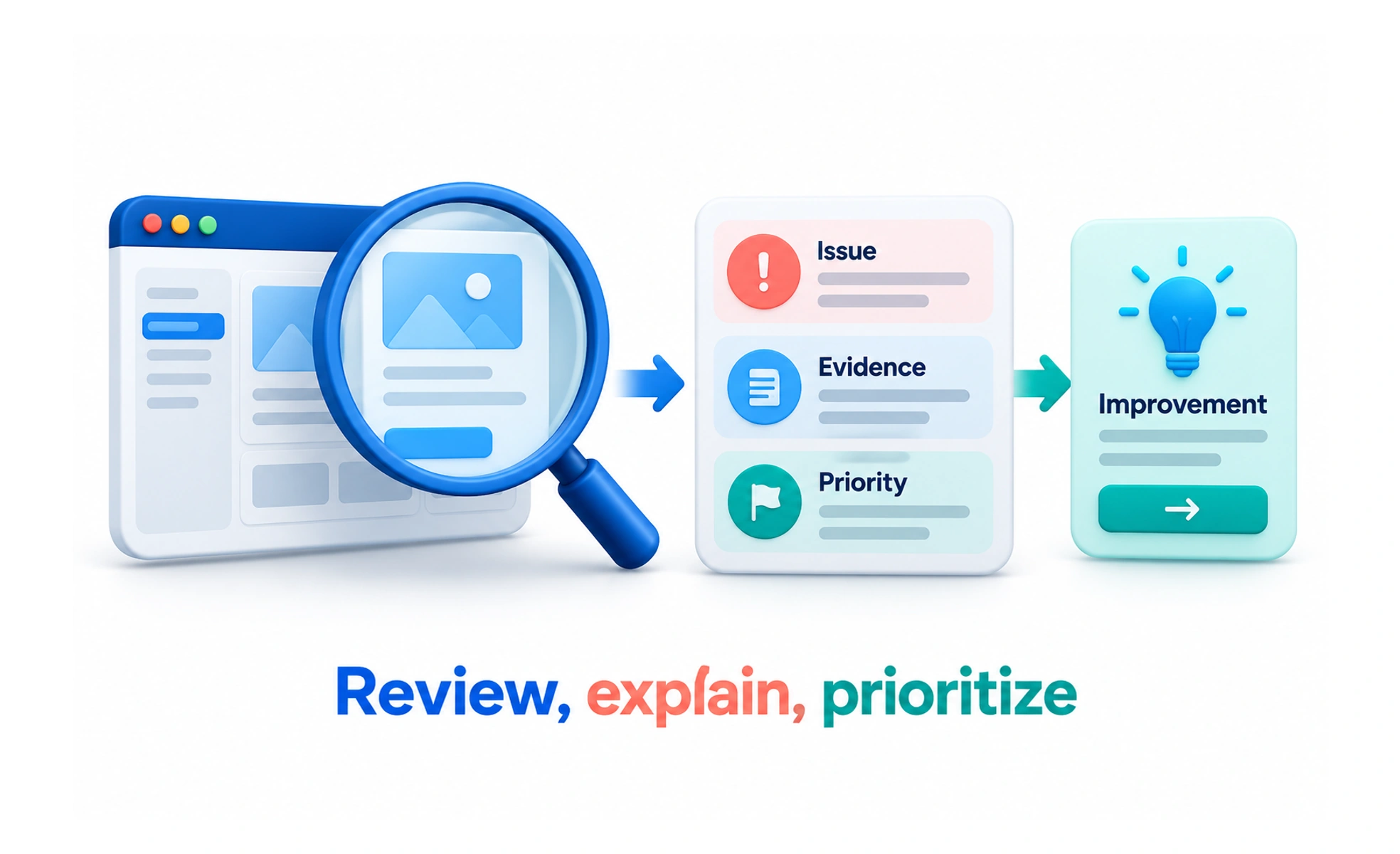
A UX audit is a structured review of an existing product experience. It identifies usability and consistency problems, examines supporting evidence, and turns findings into prioritized improvements.
A building inspection follows important routes and checks how the space works, rather than judging only the entrance. A UX audit should examine complete tasks in the same way.
Define the scope and questions
Choose the audience, journeys, environments, and devices the review will cover. Include meaningful states such as empty data, failure, and returning use. Explain what is outside scope so a focused audit is not mistaken for a complete evaluation of the whole service.
Use several kinds of evidence
Combine direct interaction with research, analytics, support issues, and suitable design principles. Compare actual behavior with intended requirements. A reviewer’s observation can identify a plausible problem, but it should not be presented as proof of user impact without supporting evidence.
Record actionable findings
For each issue, describe the trigger, observed behavior, expected outcome, and likely consequence. Include reproduction steps and relevant context. Separate confirmed defects from hypotheses, and prioritize by severity, frequency, and the importance of the affected task.
Example: profile editing
An audit can check whether a mobile drawer opens smoothly, fields remain reachable, and changes survive reload. It should also examine permission errors and an interrupted save. A useful report connects visual gaps and persistence failures to concrete actions and verifies repairs in the same conditions.
Frequently asked questions
Key takeaways
- Define journeys, audience, and review limits.
- Combine inspection with relevant product evidence.
- Separate confirmed findings from assumptions.
- Prioritize and verify concrete improvements.