

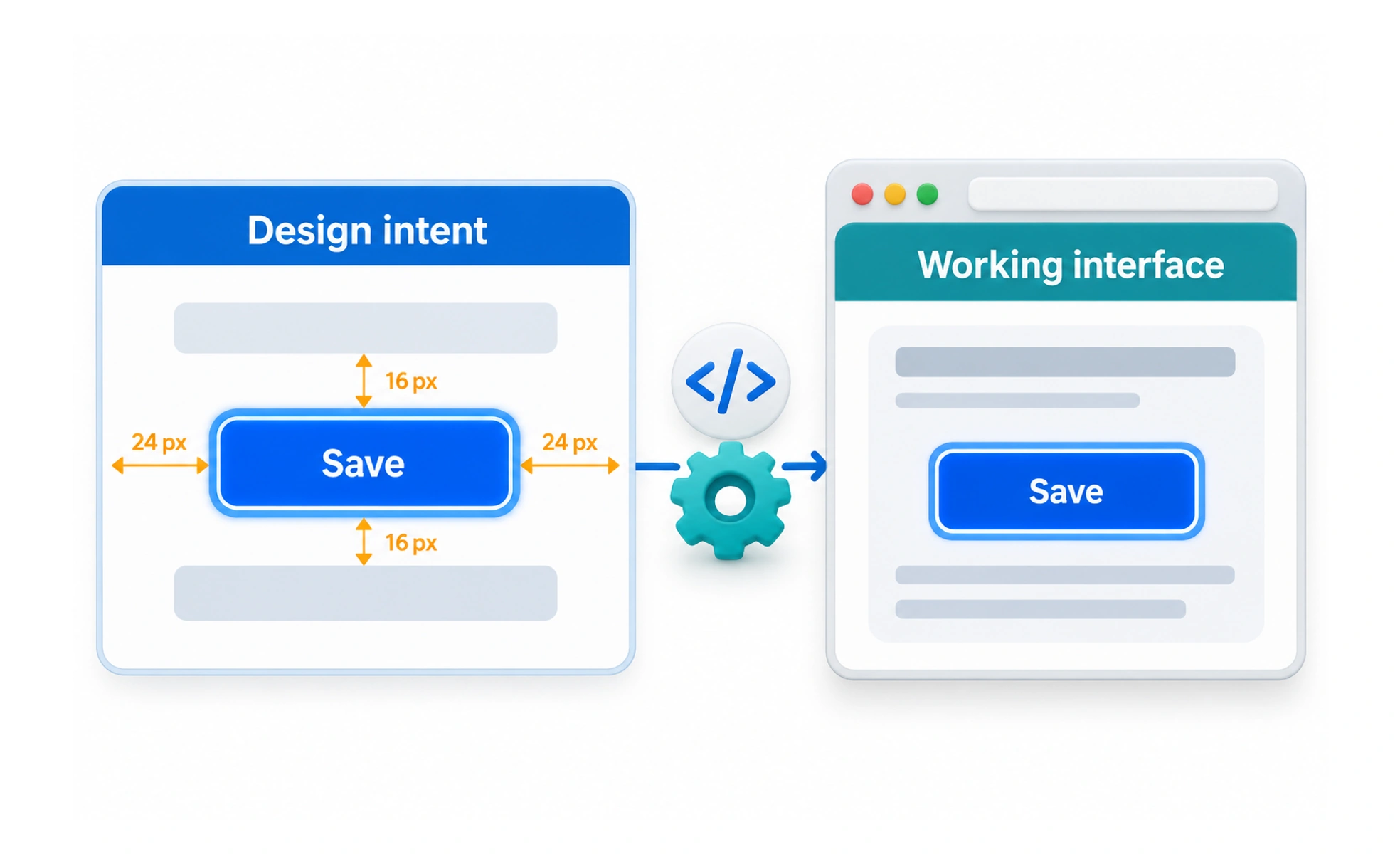
UX engineers work across interaction design and frontend engineering. They may prototype complex behavior, build reusable interface components, or help a team resolve the gap between a design and a production implementation.
A UX engineer is like a bridge builder who understands both riverbanks. They help the design cross into a working system without losing the qualities that made the original experience useful.
Translate design intent into behavior
A design describes more than colors and spacing. It includes states, transitions, keyboard behavior, validation, responsive changes, and what happens when data is missing. UX engineers work with designers to make these details explicit and implementable.
Build reusable and accessible interfaces
Component libraries let teams share consistent patterns instead of recreating each control. A UX engineer considers semantic HTML, focus order, screen readers, motion preferences, and touch targets as part of the component contract rather than as a final polish pass.
Prototype to reduce uncertainty
When an interaction is technically or behaviorally uncertain, a coded prototype can help a team evaluate it before committing to a larger build. The prototype should answer a specific question; it may be disposable and should not be confused with production-ready architecture.
Collaborate across disciplines
The role is valuable when design and engineering have shared ownership of experience quality. UX engineers discuss constraints early, explain trade-offs, and help verify the finished behavior. Team structures vary, so responsibilities should be defined rather than inferred from the job title.
Frequently asked questions
Key takeaways
- Connect design intent to complete interactive behavior.
- Treat accessibility and responsive states as implementation requirements.
- Use code prototypes to answer focused questions.
- Clarify responsibilities because role boundaries vary by team.