

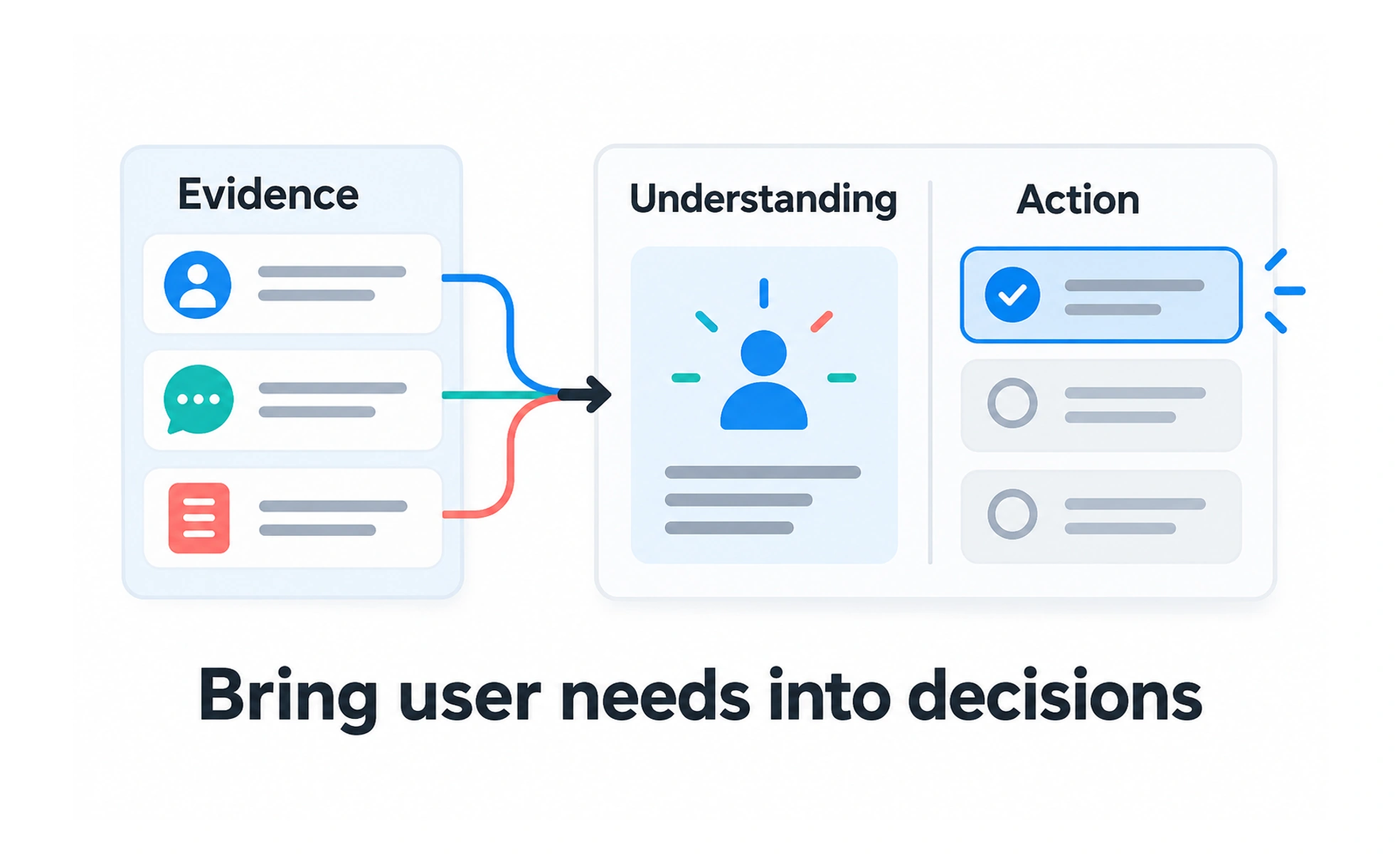
UX evangelism is the work of helping an organization understand and apply user-centered design. It builds support by connecting user evidence to decisions, shared practices, and product outcomes.
A good guide helps a group see why a route matters and what the evidence says, instead of demanding that everyone follow without explanation.
Connect design to real decisions
Start with a decision the team needs to make, then bring relevant research, usability findings, or support evidence into the discussion. Explain how a proposed change affects people and the organization. A presentation about design values is more persuasive when it is connected to a concrete need.
Adapt the explanation to the audience
Engineers, executives, researchers, and customer teams may need different examples and levels of detail. Use plain language and invite questions. Avoid presenting design as a discipline that always has the single correct answer; explain trade-offs and what further evidence could change the recommendation.
Build habits, not dependence on a champion
Offer practical ways for colleagues to include users, test assumptions, and notice experience problems in routine work. Share templates and examples, but make them adaptable. Progress is stronger when teams can make thoughtful user-centered decisions even when a particular advocate is absent.
Keep advocacy honest and inclusive
Represent research faithfully, including disagreement and limitations. Do not claim that a small study speaks for every person. Make room for affected communities and accessible participation. Advocacy should influence decisions through evidence and collaboration, not pressure people into agreement or dismiss other forms of expertise.
Frequently asked questions
Key takeaways
- Use user evidence to inform specific organizational choices.
- Explain trade-offs in language suited to the audience.
- Help teams build repeatable user-centered habits.
- Represent evidence and affected people honestly.