

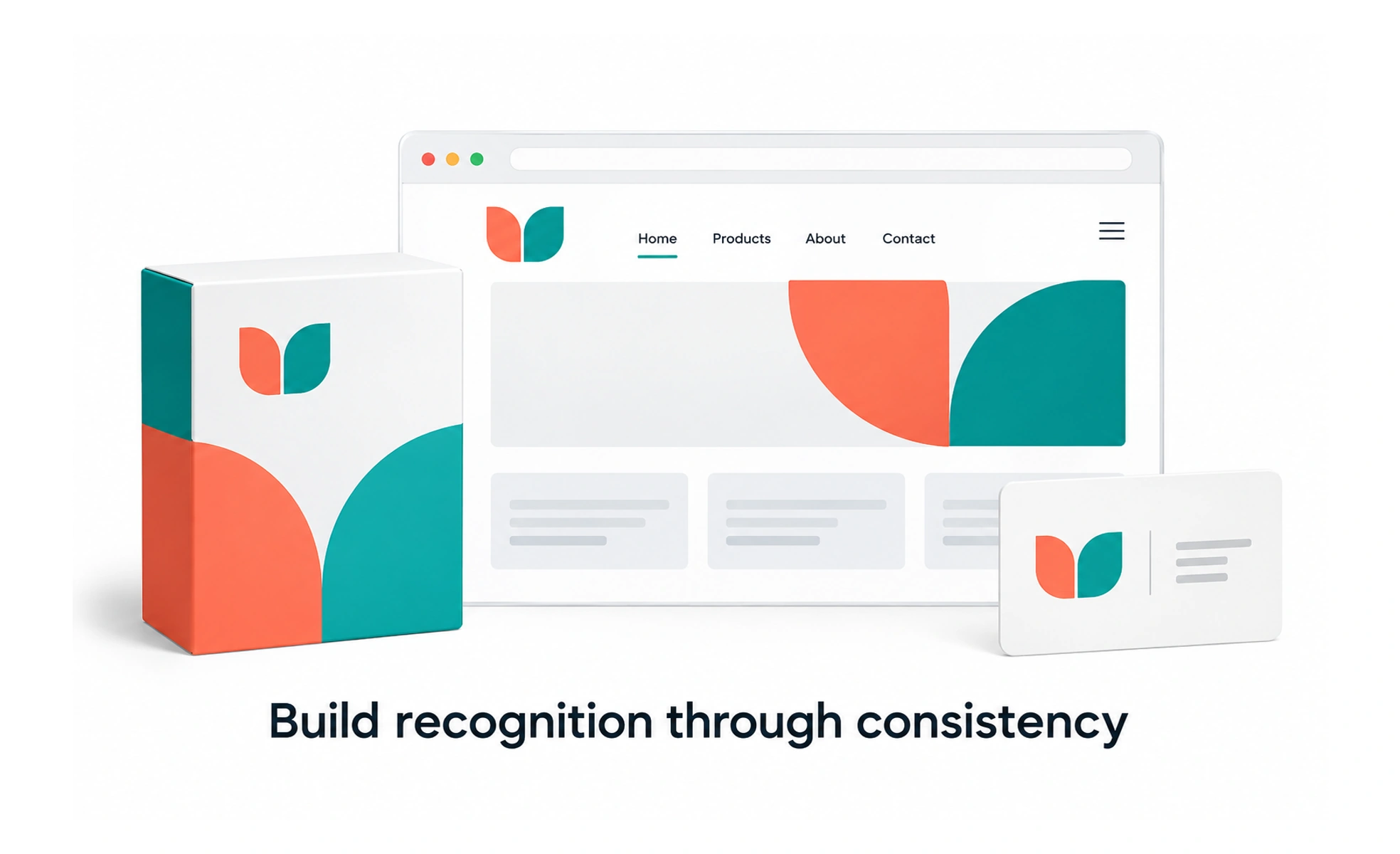
A brand is the impression and meaning people associate with an organization. Branding is the ongoing work that influences that impression through identity, language and experience. A logo helps recognition, but it cannot make an unreliable service feel trustworthy for long.
Begin with a clear promise
Decide who the product serves, what it helps them achieve and what makes its approach distinctive. These decisions guide the name, tone and visual identity.
A learning product might promise practical explanations and honest progress. Its interface, examples and support should reinforce that promise. Claiming expertise while displaying invented achievements would work against it.
Build a coherent expression
A recognizable identity can include a logo, typography, color, imagery and a way of speaking. Give each a defined role so people do not have to reinvent the product’s appearance on every page.
Consistency does not require every surface to be identical. A warning still needs to communicate risk, and a diagram may need colors outside the main brand palette. The identity should support meaning rather than erase useful distinctions.
Example: updating a product identity
A team replaces an old logo and introduces a clearer writing style. It also checks emails, loading states, social previews and help pages, where old identity elements can easily remain.
The change feels complete when these places tell the same story and the service fulfills it. Replacing a header mark while leaving unrelated author photos and contradictory messages creates a mixed impression.
Keep the experience credible
Describe actual capabilities and use examples that belong to the product. If the catalog is small, explain its focus instead of borrowing the scale claims of a larger competitor.
Review the identity as the product grows. New features should extend recognizable decisions while still solving their own tasks. A brand guide is useful only if it reflects what the team actually ships.
Frequently asked questions
Key takeaways
- Branding connects identity with a clear product promise.
- Recognition comes from more than a logo.
- Use consistent decisions without flattening meaningful states.
- Credible behavior supports the impression the identity creates.