

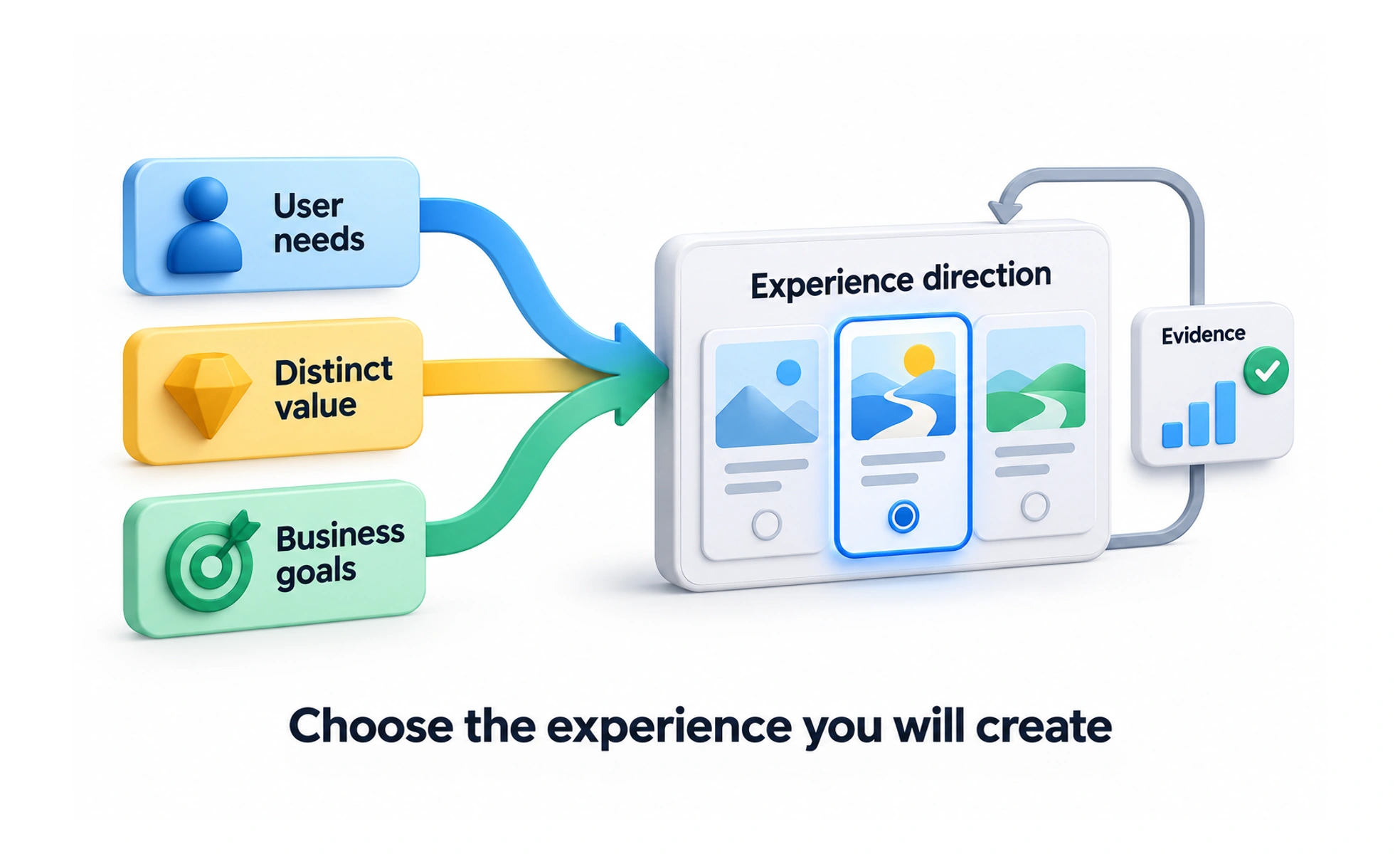
UX strategy is a set of choices about the experience an organization will create, for whom, and how that experience supports its goals. It connects user needs, a distinct value proposition, and practical measures of progress.
A journey plan names the destination, explains why it is worth reaching, and helps travelers choose a route. UX strategy gives teams similar direction for experience decisions.
Ground direction in evidence
Understand people’s goals, current alternatives, barriers, and the context in which they act. Include organizational capabilities and constraints. Strategy should state what is known, what is uncertain, and which assumptions need further investigation rather than presenting a vision as established fact.
Make deliberate choices
Define the audience and value the experience will prioritize. Identify what the product will do distinctively and what it will not focus on now. Without choices, a strategy can become a list of desirable qualities that gives little help when time, budget, and competing needs require trade-offs.
Connect principles to delivery
Translate direction into principles, opportunities, and decisions teams can use. Coordinate with product and business strategy without confusing their scopes: UX strategy focuses on the intended experience, while product strategy also addresses the product’s market, portfolio, and operating choices. The work should influence actual priorities.
Measure whether direction is helping
Select measures tied to user and organizational outcomes, such as task success, comprehension, or reduced avoidable effort. Pair quantitative signals with research that explains why results changed. Review the strategy when evidence or conditions shift; it should guide learning, not lock teams into an outdated plan.
Frequently asked questions
Key takeaways
- Connect user needs with organizational goals.
- Make explicit choices about audience, value, and focus.
- Turn direction into principles and delivery decisions.
- Measure outcomes and revise when evidence changes.