

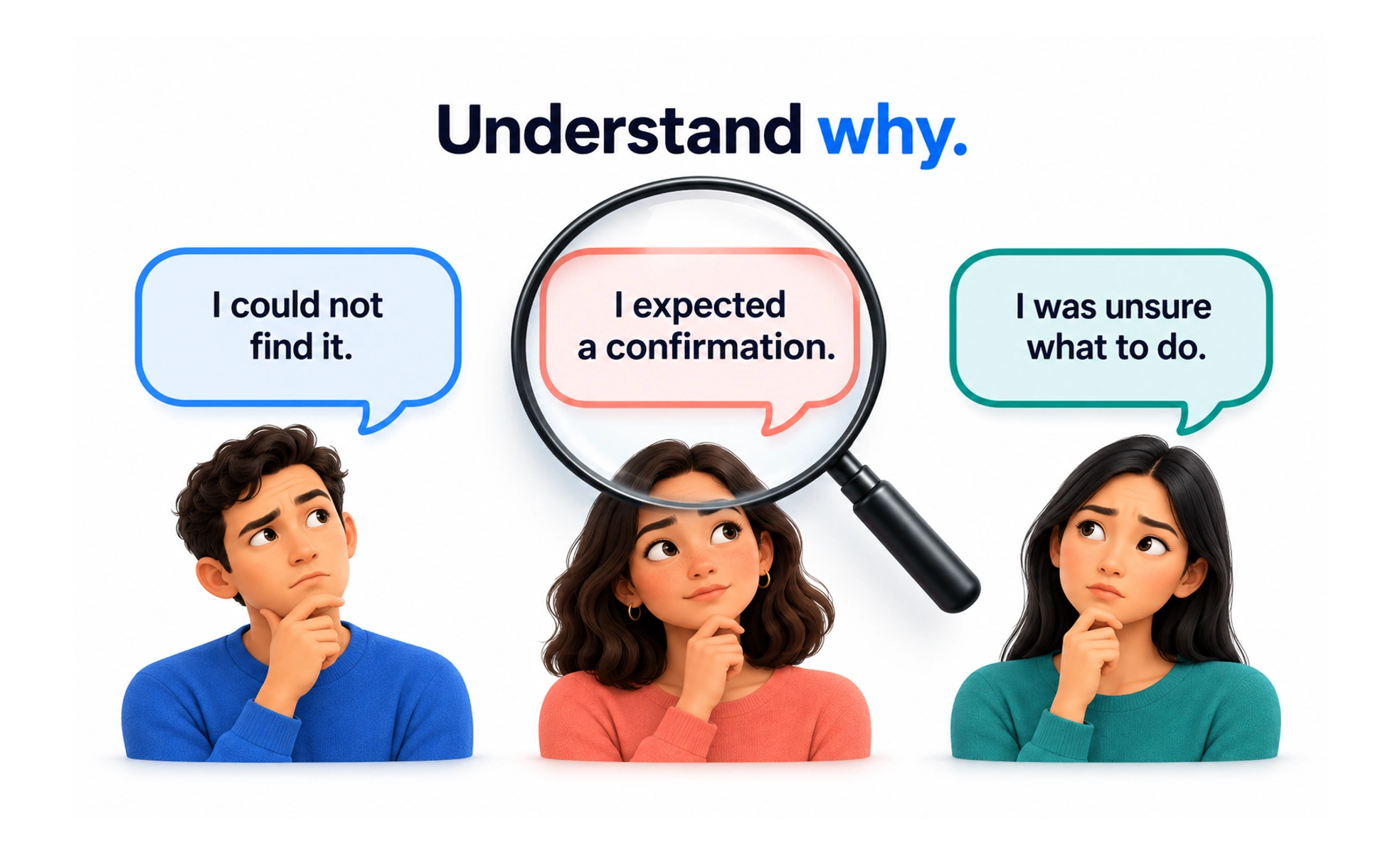
It relies on interviews, usability tests and direct observation. Rather than measuring how often an action happens, it reveals the underlying human reasons why it happens.
Think of it as having a heart-to-heart conversation with someone over coffee. You do not tally survey checkboxes. You listen to their story to understand how they genuinely feel.
How it works
Qualitative research focuses on uncovering personal context, mental models and emotional reactions through open dialogue and observation.
- One-on-one sessions let researchers ask open-ended questions, observe facial expressions and probe deeper into specific user struggles.
- Think-aloud protocols ask participants to verbalize their unfiltered thoughts while attempting realistic tasks on prototypes.
- Field observations watch people working in their natural daily environment to spot unstated workarounds, physical interruptions and external tools.
- Thematic analysis groups recorded transcripts and observations into recurring patterns of customer pain and unmet goals.
When to use it
Use qualitative inquiry when you need discovery, explanation or deep empathy for unfamiliar customer realities.
- Early discovery before writing any code helps validate whether a real human problem actually exists in the real world.
- Diagnosing funnel drops explains why analytics show users abandoning a checkout workflow at a specific, unexpected step.
- Testing prototypes uncovers conceptual confusion and vocabulary mismatches before engineering teams build full features.
- Evaluating content tone reveals whether microcopy sounds reassuring, clinical, patronizing or confusing to first-time readers.
Common mistakes
Teams often undermine qualitative studies by treating them like statistical opinion polls.
- Asking leading questions nudges participants to give polite answers rather than honest, critical feedback.
- Treating small samples as statistical truth by claiming four out of five users represent the whole market population.
- Asking users what features they want instead of observing where their current process breaks down and why.
Frequently asked questions
Key takeaways
- Qualitative research answers why users behave the way they do.
- A small cohort of five participants can uncover most major usability obstacles.
- Direct observation reveals struggles that users forget to mention in surveys.
- Never use qualitative feedback to calculate statistical market percentages.