

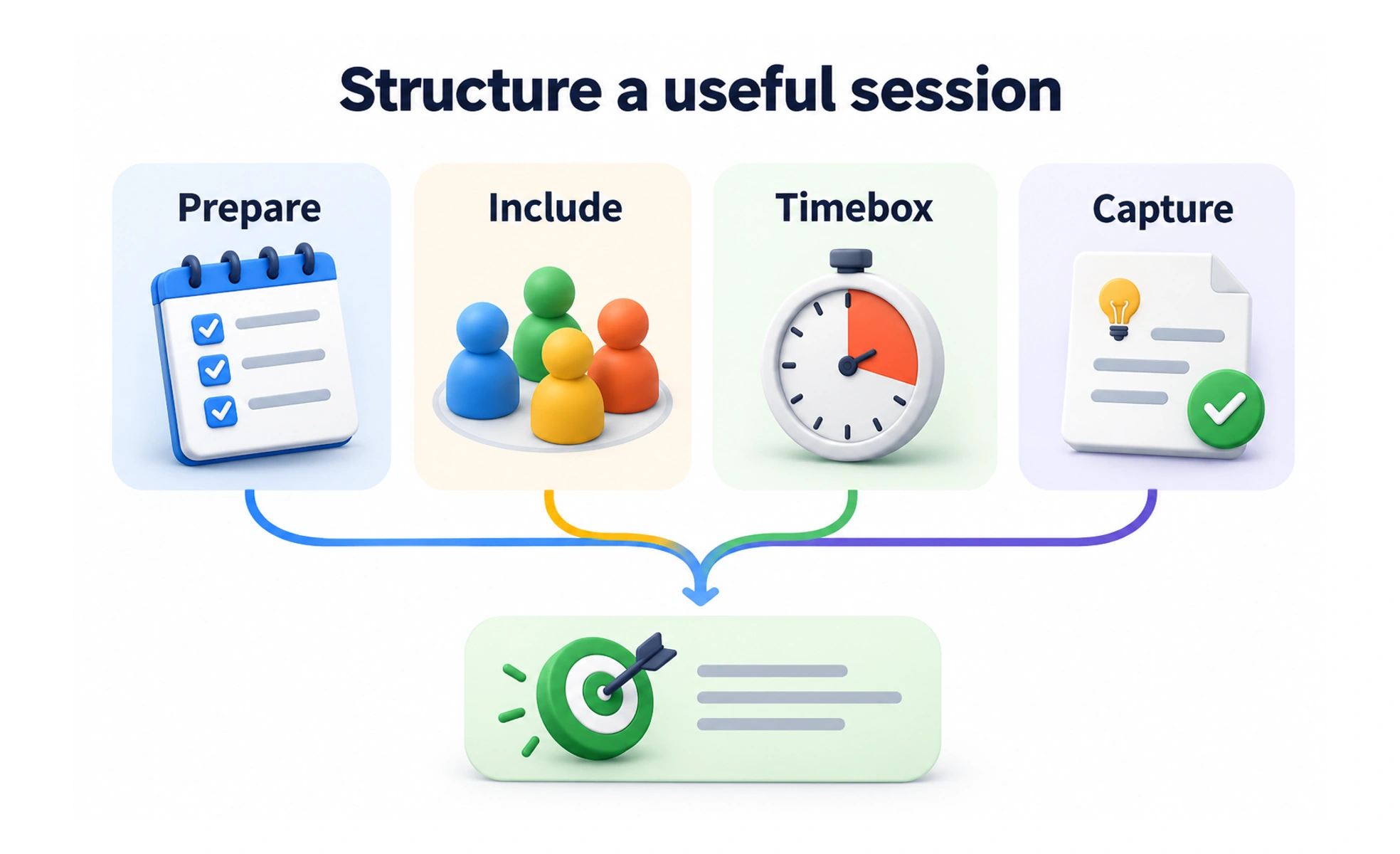
Workshop facilitation guides a group through a structured session toward a useful outcome. It involves preparing activities, supporting participation, managing time, and helping the group make its reasoning visible.
A good guide helps a group follow a route without deciding every step for them. A facilitator supports the process so participants can contribute their knowledge.
Prepare the process
Clarify the purpose, participants, decision rights, and desired output. Choose activities and timing that fit those needs, including breaks and accessible ways to participate. Explain any preparation so people can arrive with relevant information rather than improvise everything during the session.
Create room for different voices
Use individual reflection, small groups, or written contributions when open discussion would favor the quickest or most senior speakers. Invite missing perspectives without putting people on the spot. Make the tools and materials usable for remote participants and people with different access needs.
Guide discussion and uncertainty
Keep the group connected to the question, summarize disagreements fairly, and distinguish evidence from assumptions. A facilitator can be a subject expert, but should make their role clear when offering an opinion. Avoid steering the activities toward a preferred answer while presenting the process as neutral.
Close with decisions and ownership
Leave time to review what was learned, what was decided, and what remains open. Record next steps, owners, and how the result will be shared. If the session did not establish enough evidence for a decision, say so and identify the learning needed instead of forcing agreement.
Frequently asked questions
Key takeaways
- Design the session around its purpose and participants.
- Support inclusive ways to contribute.
- Keep evidence, assumptions, and opinions distinguishable.
- Close with a clear record and accountable next steps.